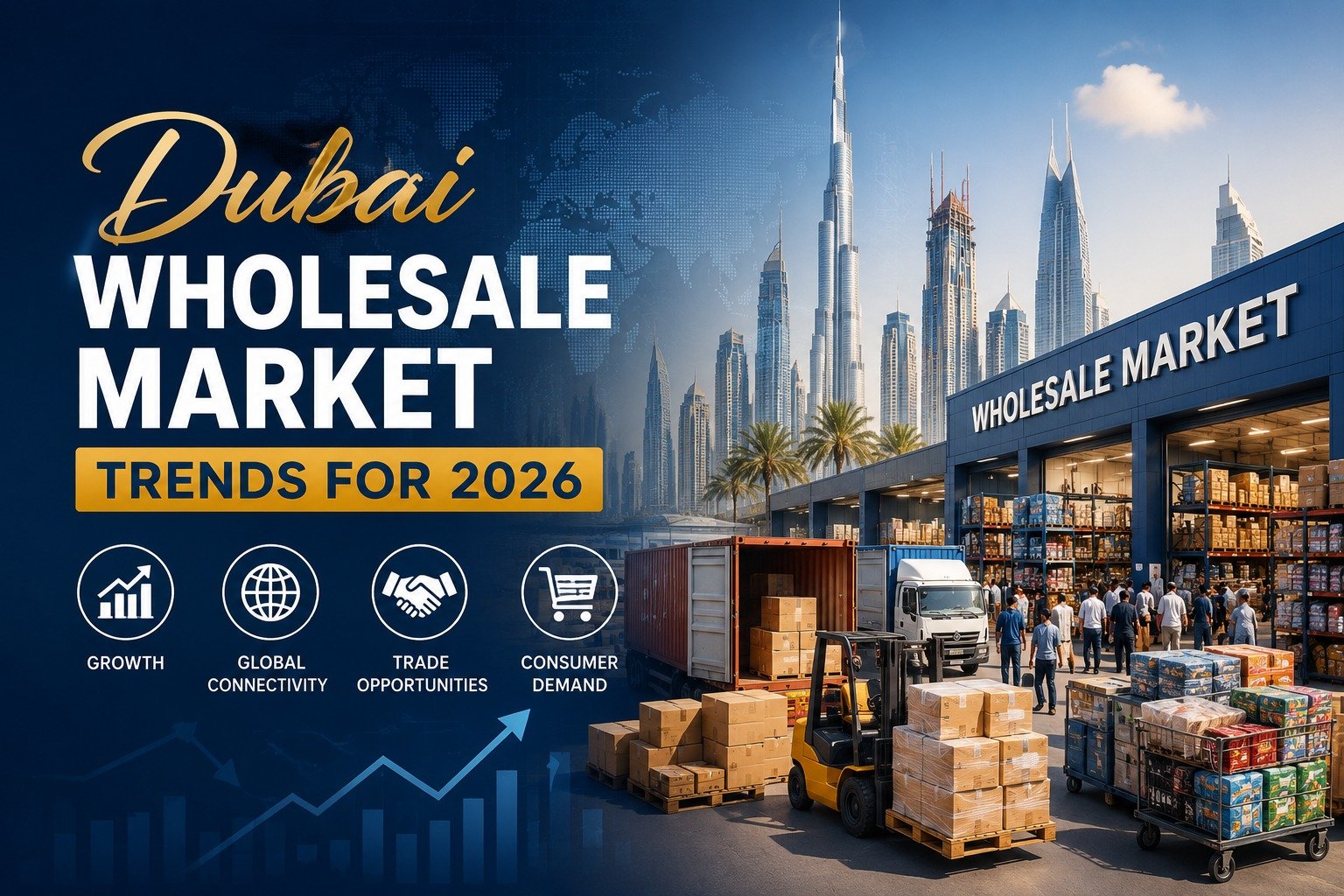
Dubai Wholesale Market Trends for 2026
The Dubai wholesale market continues to evolve as businesses look for competitive prices, reliable suppliers, faster logistics, and access to international buyers. In 2026, Dubai is strengthening its position as a major global trading hub through digital commerce, modern logistics, advanced warehousing, and improved trade infrastructure.
For importers, exporters, retailers, distributors, and new entrepreneurs, understanding the Dubai Wholesale Market Trends for 2026 can help identify profitable opportunities and make better sourcing decisions.
Key Dubai Wholesale Market Trends for 2026
The wholesale sector in Dubai is becoming more digital, efficient, and globally connected. The following table highlights the key trends businesses should watch in 2026:
| Wholesale Trend | What It Means for Businesses | Potential Business Benefit |
|---|---|---|
| Digital B2B Commerce | More suppliers and buyers are using online wholesale platforms and digital catalogs. | Wider market reach and easier supplier discovery |
| E-Commerce Growth | Wholesale businesses are adapting to smaller, faster, and more frequent orders. | Faster fulfillment and improved customer experience |
| Advanced Logistics | Modern warehousing, cargo facilities, and tracking systems are becoming increasingly important. | Reduced delivery times and better inventory control |
| Supply Chain Resilience | Businesses are diversifying suppliers and logistics routes to reduce disruption risks. | More reliable product availability |
| AI & Automation | Technology is being used for inventory, forecasting, customs, and order management. | Greater operational efficiency |
| SME Participation | More small and medium-sized businesses are entering digital wholesale markets. | New opportunities for suppliers and retailers |
| International Trade | Dubai continues to connect suppliers and buyers across Asia, Europe, Africa, and the Middle East. | Easier regional and international expansion |
These trends show that success in Dubai’s wholesale sector is increasingly dependent on more than competitive pricing. Businesses that combine reliable sourcing, efficient logistics, digital tools, and strong market knowledge are better positioned to respond to changing customer expectations Blogs.
1. Growing Demand for Digital Wholesale
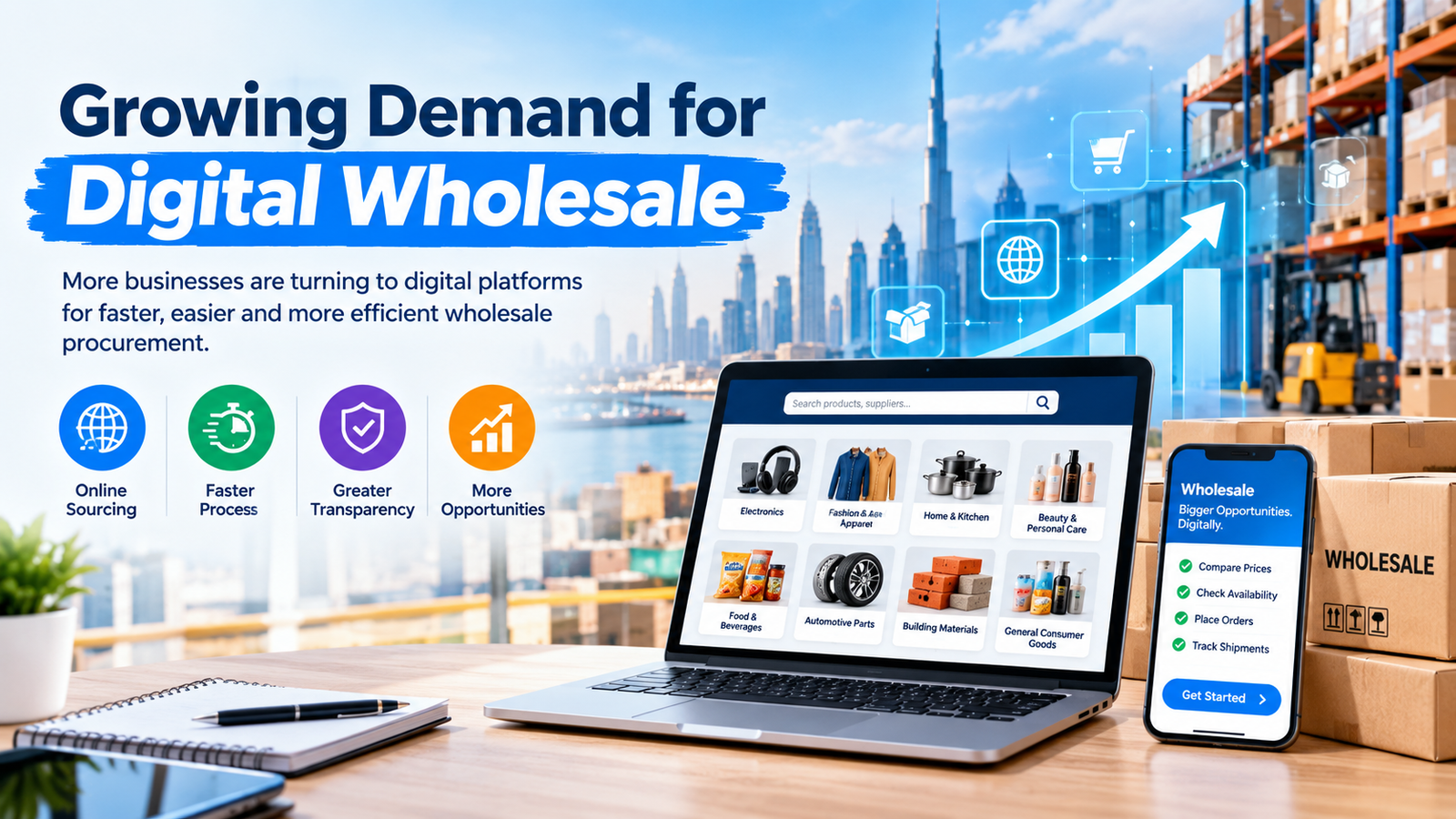
One of the biggest changes in Dubai’s wholesale industry is the shift toward digital B2B trade. Businesses are increasingly using online platforms to discover suppliers, compare products, communicate with buyers, and manage orders.
Dubai’s Department of Economy and Tourism partnered with Tradeling through the Dubai Traders initiative to help Dubai-based SMEs move toward digital wholesale and expand into regional and international markets.
Businesses can also explore different Dubai wholesale markets to understand how traditional wholesale trading and digital sourcing opportunities work together.
Digital catalogs, online payments, automated ordering, and B2B marketplaces are becoming increasingly important for wholesalers that want to remain competitive.
2. E-Commerce Is Changing Wholesale Distribution
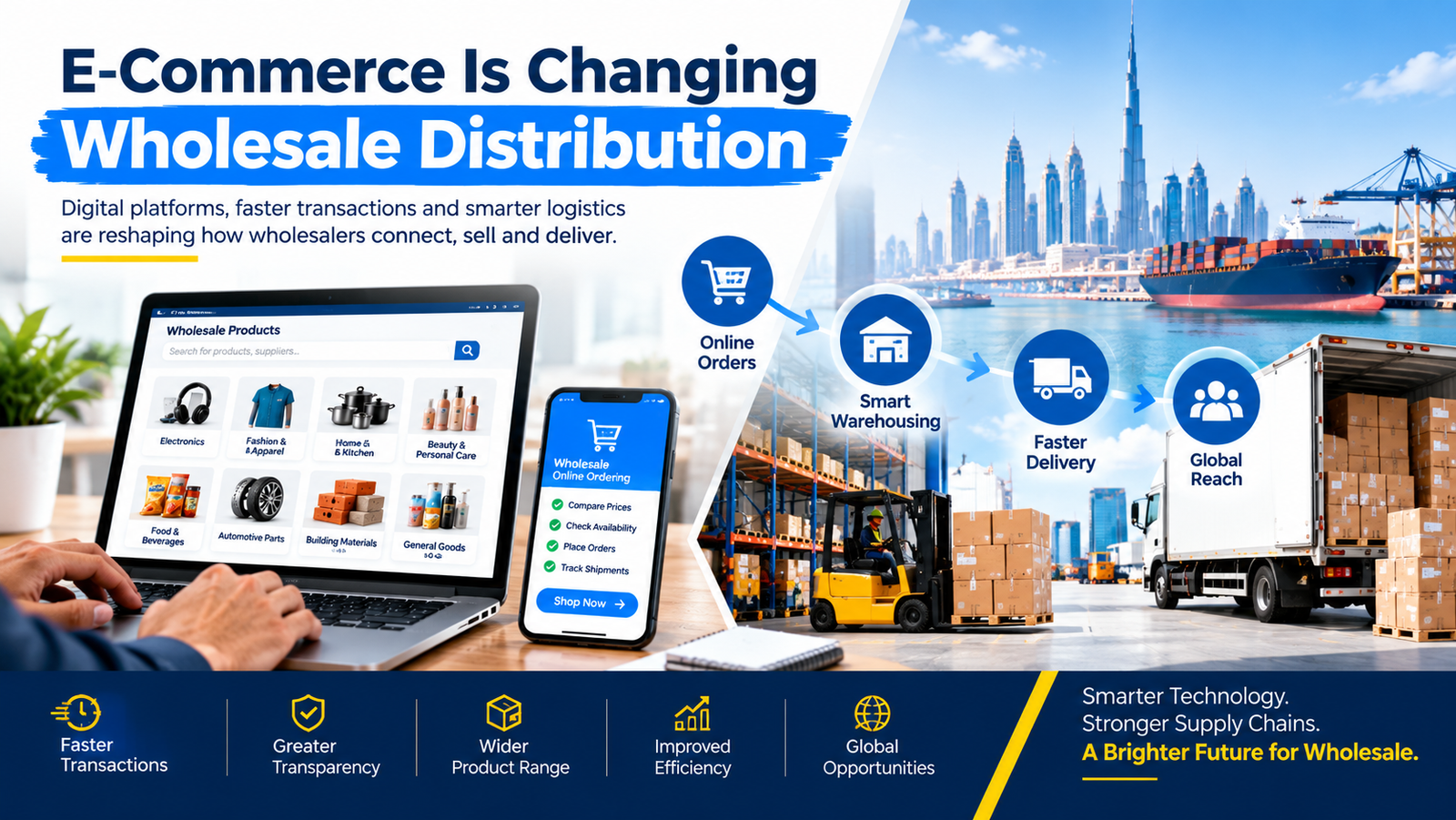
E-commerce is creating new opportunities for wholesalers in Dubai. Customers increasingly expect faster delivery, wider product choices, and convenient purchasing options. These changes are also shaping Dubai Wholesale Market Trends, as wholesalers increasingly focus on efficient fulfillment, digital ordering, inventory management, and faster delivery.
Dubai Customs reported that its Air Cargo Centers processed approximately 18.2 million customs transactions during the first half of 2026, representing nearly 53% growth compared with the same period in 2025. More than 6.2 million postal parcels were also handled during this period.
This growth highlights the importance of efficient fulfillment, customs clearance, inventory management, and delivery networks for businesses operating in Dubai’s wholesale sector.
For businesses comparing sourcing destinations, our guide on Dubai Wholesale Market vs Guangzhou Wholesale Market can also help explain the differences between these two major wholesale hubs.
3. Logistics and Warehousing Are Becoming More Important
Another important trend among the Dubai Wholesale Market Trends for 2026 is the increasing importance of logistics and warehousing.
Dubai’s strategic location gives wholesalers access to major air, sea, and road transportation networks. This makes the city attractive for businesses that want to import products, store inventory, and distribute goods across the Middle East and other international markets.
Dubai Customs is also investing in smart logistics systems and supply-chain solutions to improve cargo movement and trade efficiency. Its Shahin system, for example, uses advanced technology to track trucks and cargo across customs entry points.
Businesses entering the wholesale industry should therefore consider not only product prices but also warehouse location, shipping costs, customs procedures, and delivery times.
4. Greater Focus on Supply Chain Resilience
Supply chain reliability has become a major priority for international traders, and Dubai Wholesale Market Trends increasingly reflect the importance of resilient sourcing and logistics.
In 2026, Dubai Customs introduced measures designed to support trade continuity and supply-chain resilience. Its Green Corridor helped facilitate more than 203,000 containers and over 3.16 million tonnes of goods worth more than AED 33.9 billion between March and June 2026.
For wholesalers, this means that having reliable suppliers and flexible logistics partners is increasingly important. Businesses should consider maintaining alternative suppliers, monitoring shipping routes, and keeping sufficient inventory of fast-moving products.
5. Dubai Remains a Key Global Trading Hub
Dubai’s location between Asia, Europe, Africa, and the Middle East continues to make it an attractive destination for international trade.
The city’s ports, airports, free zones, wholesale markets, and logistics infrastructure create opportunities for companies that want to source products and distribute them across regional markets.
For new businesses, exploring Dubai wholesale markets can be a useful first step toward understanding product categories, suppliers, pricing, and market opportunities.
6. Technology and AI in Wholesale Operations
Technology is expected to play an even greater role in wholesale operations throughout 2026.
Wholesalers can use technology for:
- Inventory forecasting
- Automated order processing
- Customer relationship management
- Product recommendations
- Warehouse management
- Shipment tracking
- Demand forecasting
- Digital payments
Dubai Customs is also increasing the use of artificial intelligence to improve decision-making, operational efficiency, and customs readiness.
For wholesalers, adopting digital tools can reduce manual work, improve inventory visibility, and help businesses respond faster to changing customer demand.
7. More Opportunities for SMEs
Small and medium-sized businesses are becoming an important part of Dubai’s growing wholesale ecosystem.
The Dubai Traders initiative is helping SMEs transition into digital wholesale and B2B commerce. According to Dubai’s Department of Economy and Tourism, the initiative had onboarded more than 2,600 new e-commerce sellers and supported more than 410 Emirati-owned businesses by January 2026.
This creates opportunities for smaller businesses to reach institutional buyers, regional customers, and international markets without depending entirely on traditional sales channels.
Businesses interested in expanding their sourcing strategy can also review wholesale market guides and related industry resources on your website.
8. Popular Wholesale Product Categories
The latest Dubai Wholesale Market Trends show continued demand across a wide variety of product categories, giving businesses access to diverse sourcing opportunities.
Dubai’s wholesale sector covers a wide variety of product categories. Depending on demand and market conditions, some of the important categories include:
- Fashion and apparel
- Electronics and accessories
- Home and kitchen products
- Beauty and personal-care products
- Food and beverages
- Automotive parts
- Building materials
- Packaging products
- General consumer goods
Before purchasing in bulk, businesses should compare supplier prices, product quality, minimum order quantities, shipping costs, customs requirements, and expected profit margins. Understanding Dubai Wholesale Market Trends can also help buyers identify growing product categories and make more informed purchasing decisions.
9. Faster Customs and Trade Processing
Efficient customs procedures are another important factor influencing wholesale businesses.
Dubai Customs provides an Integrated Customs Tariff that helps businesses classify traded goods and understand applicable tariff information. The system uses the Harmonized System for product classification and includes more than 5,000 commodity groups.
Understanding customs classification before importing products can help wholesalers avoid unnecessary delays and unexpected costs.
10. What Wholesalers Should Expect in 2026
The main lesson from the Dubai Wholesale Market Trends for 2026 is that the market is becoming more digital, technology-driven, logistics-focused, and internationally connected.
Businesses planning to enter Dubai’s wholesale sector should focus on:
- Finding reliable suppliers.
- Comparing wholesale prices before purchasing.
- Using digital B2B platforms where appropriate.
- Improving inventory management.
- Choosing strategically located warehouses.
- Building flexible shipping networks.
- Monitoring customer demand.
- Using technology to improve business operations.
- Understanding customs requirements.
- Building strong relationships with buyers and suppliers.
A combination of physical market knowledge, digital tools, and efficient logistics can help businesses compete in Dubai’s rapidly developing wholesale environment.
Conclusion
The Dubai Wholesale Market Trends for 2026 demonstrate how Dubai’s wholesale sector is moving toward digital commerce, smarter logistics, advanced technology, supply-chain resilience, and stronger international connectivity.
For importers, exporters, retailers, distributors, and SMEs, Dubai continues to offer significant opportunities. Businesses that understand market demand, select reliable suppliers, manage inventory efficiently, and use modern digital tools can position themselves for long-term growth.
Whether you are looking for local suppliers or comparing international sourcing destinations, understanding Dubai’s wholesale ecosystem is an important step toward making smarter purchasing and expansion decisions.